To criticize the choir of European war-mongering leaders is to be branded (at best) a "Putinist". Familiar tune. Not so long ago, and even now, appearing "anti-establishment" will earn you the label of "populist". This B-movie is replaying before our very eyes. Overview.
"Boss, we''ve got a storytelling problem."
Put in these terms, it''ll be a long time before the question will be asked in nervousness in the inacessable chambers of the European Commission or NATO. And with good reason: the "narrative" caresses without flinching. There''s nothing to fear from the mainstream media. Nor do politicians. NATO''s word is gospel.
But first, let''s get something straight. Given that there is no one who would have the idea of calling « narrative » what the man sitting next to him at the bistro tells us about his life, nor anyone who would say that the Bible or the Koran present a bizarre narrative, no one in their right mind, well, to use the word: it is generally found in scholarly publications that no one reads, and we can therefore do without it.
By "narrative", we mean: how you tell a story, or better still, how you account for a sequence of facts. And the problem arises when the interpretation of these facts and sequences differs.
On the bloody conflict in Ukraine, for example, there are those who interpret it as the result of condemnable Russian aggression, and others as the culmination of an escalation in provocations targeting the Russian nation, begun according to some in 1992.
Where''s the camp?
To caricature, here we have, in order, the "pro-NATO version" and the "pro-Russian version". The quotation marks indicate that this terminology is neither shared nor exhaustive. It can be illustrated by two axioms. The first is that anyone who disbelieves the pro-NATO version will automatically be disqualified as pro-Russian. And the second is that, while it''s possible to be pro-NATO without saying so, the accusation of a pro-Russian stance is tantamount to an inextricable infamy accusation and unappealable condemnation.
To put it another way, few media outlets are explicitly pro-NATO, even though almost all of them are quick to disqualify critical voices as pro-Russian.
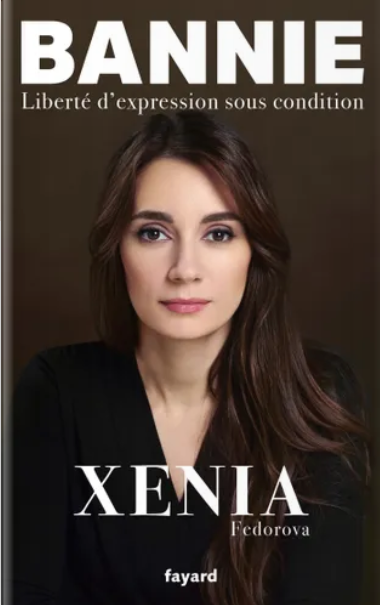
In the book Xenia Fedorova has just published on her experience as a Russian journalist in Paris, she condenses this very well by expressing her concern at the tendency to label "information with which [one] disagrees as false", adding that this process "threatens both freedom of speech and journalism." She speaks from experience.
Appointed in 2014 to head up the French branch of the Russian TV news channel, Russia Today, she was met from the outset with massive rejection due to the fact that she didn''t belong to the "right camp", both by the authorities and by the corporation. By the right camp, we mean the pro-NATO camp. Nor is there any need to remind NATO Alert readers of the epilogue to drama, which saw the European Commission (backed by the 27 ad hoc ministers of the member states, which Ms Fedorova eludes) ban Russia Today from broadcasting in Europe in 2022. This to the general indifference of the journalistic profession during such a radical and unprecedented act of censorship.
Dubious amalgams
Hence the title of the book, Bannie - Liberté d''expression sous condition (Fayard, 296 pages, 21.90 euros). In support of her story, albeit unintentionally, the article in Le Monde dated March 26, 2025, which, unafraid to use dubious amalgams to present the author as "The Russian muse of the Bolloré Group" (sic), was given a full page to... demolish - ad personam - Ms Fedorova.
It''s a sobering thought. Popular wisdom has it that you don''t usually try to kill a fly with a bazooka. And then, one of two things. Either Le Monde is going off the rails by swapping its pen for a big gun, or the Fayard/Fedorova phenomenon is no fly at all. In which case, it''s another micro-fissure in the overwhelming pro-NATO front.
But there are others, not as micro as this. The refusal of Hungary and Slovakia, member states of the European Union, to follow in the footsteps of the warmongers, to which we could add Italy, which for its part rejected all plans to send troops to Ukraine, and demonstrated massively on April 5 against the antisocial and warlike policies of the European Commission. Three countries out of twenty-seven carries little weight.
The wind is turning, piano
But here and there, there are also signs of movement. Such as these articles in De Morgen (March 5) and Trends/Tendances (February 17). The former calls for us to turn our backs on the war rhetoric of the past "three years [by] experts and journalists", who are now forced to admit, "one after the other, that they were wrong". The second reports on the analyses of the influential US economist Jeffrey Sachs (heard by the European Parliament in February, but ignored by Le Soir and Le Monde), that is diametrically opposed to those of the "pro-NATO camp".
More than a shudder, perhaps. For one Sachs, on the Facebook platform, has an audience of 73,000, and another, equally critical, the Norwegian geopolitical scientist Glenn Diesen, has 96,600 subscribers on X, Ivan Katchanovski (University of Ottawa), 42,700, the French economist Jacques Sapir, 53,000, and add the voice of the South, the BRICS+ (Brazil, Russia, India, China, South Africa, etc.), heard by 1,360,000 people.
In other words, from NATO''s point of view, there are more than a few cracks in the story of the war in Ukraine. And, as a result, the blackout imposed by the steamroller of the dominant narrative is not inevitable. Commenting on a recent critique of NATO by French thinker Emmanuel Todd, Xenia Fedorava''s book sums up perfectly the state of radical degradation in which free public discussion finds itself in our so-called democratic societies: "This substantiated thesis [by Todd] could be debated, discussed. It is impossible today."
Impossible is not French, they say, and it''s not out of place here to recall, with the philosopher Spinoza, that every statement implies the existence of its opposite. Just as a majority opinion was first a minority opinion, and vice-versa.
Information war
On Saturday 19 April, the newspaper Le Monde ran a six-column headline on its front page proclaiming: ‘Information war: the West is losing ground,’ with a link to a double-page spread of articles and, already under the headline, an announcement that ‘Russia and China are investing three to four times more than the West in their state media.’
We know little more about these raw figures, extrapolated by who knows what means, or even how China would use them in practice. Only the Russian news channel RT, banned in Europe, provides some analysis. For the only common thread, and the subject of much ink, is the burial by the United States of Voice of America, Radio Free Europe and its eastern counterpart Radio Free Asia, a funeral made worse, the Paris daily warns, by budget cuts affecting the British BBC World Service and France Médias Monde.
So, this time, there is nothing about the United States'' decision to stop funding some 6,200 journalists abroad, including a large number in Ukraine. Nor is there any mention of Russian ‘trolls’ – or French ones, such as Thierry Wolton, whom the same newspaper, Le Monde, called upon last December for a broad Russophobic attack, even though this journalist has been described as a ‘falsifier’ by the historian Vidal-Naquet (Monde diplomatique, February 2025).
Finally, there is no mention of the NATO unit responsible for combating disinformation, which is equated with any manoeuvres involving ‘deliberate and malicious amplification’ (Le Figaro, 3 April). By that logic, even the most nuanced criticism of NATO will be worth mapping by the unit in question, as this is one of its missions. Information war? It will undoubtedly be fiercer and even more polarised. Good guys versus bad guys.