 |
Comité Surveillance OTAN
|
|
Comité Surveillance OTAN
|
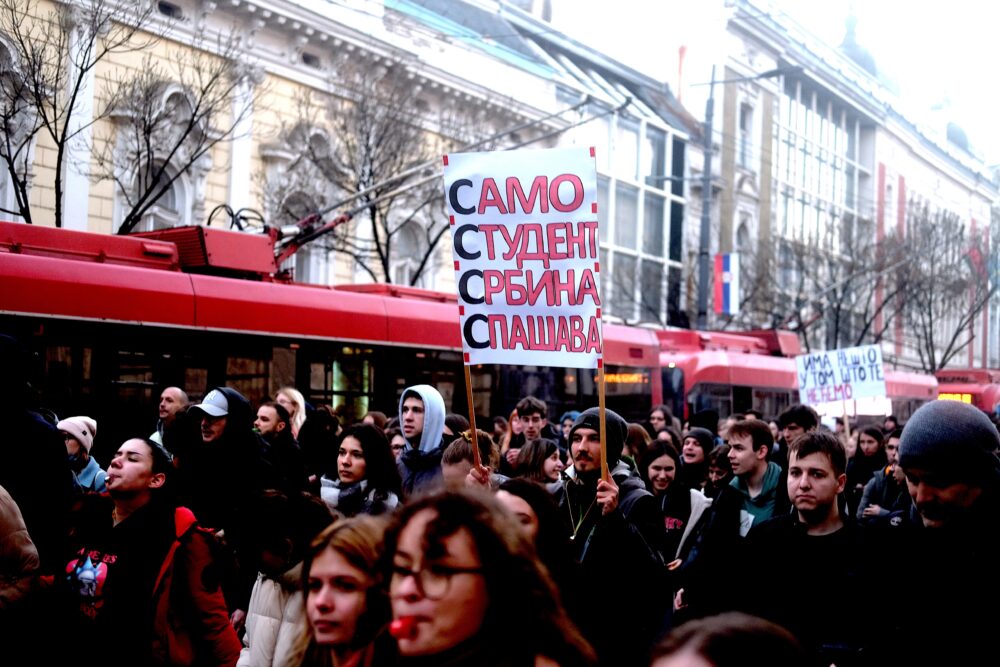
Since November 1, when the Novi Sad train station canopy collapsed, Serbia has been shaken by an unprecedented wave of demonstrations, organized for the most part by students, with the support of part of the academic community and opposition parties, both liberal and nationalist. According to them, the accident - which caused the death of 16 people - was due to the corruption that is alleged to have marred recent work carried out at this station in Serbia''s second city.
They are therefore calling for the publication of all documents concerning the renovation of the station, as well as: - the cancellation of charges against students arrested during more than five months of demonstrations, - the arrest of counter-demonstrators who have assaulted students, - an increase in funds allocated to universities, and - an investigation into a "sonic weapon" which is said to have created panic during the largest of these demonstrations, held in Belgrade on March 15.
President Aleksandar Vučić, who has been in power for twelve years, has responded to most of these demands and has - at last, some would say - embarked on a campaign against corruption: dozens of economic and political leaders, most of them members of the ruling Serbian Progressive Party (SNS), have been arrested for financial malfeasance, the prime minister and mayor of Novi Sad have resigned, contracts relating to work on the railway station have been published, and so on.
This did little to dampen the spirits of the opposition, who demanded a "technical government" and demonstrated their discontent by throwing tear gas grenades in the middle of parliament, injuring three MPs, including a pregnant woman. For his part, Vučić accuses the protesters of fomenting a "color revolution" and of being in the pay of a foreign power.
Without denying the problem of corruption in Serbia, it should be noted that other tragedies it has caused in the region, such as the recent fire at a discotheque in Macedonia (61 dead), have not provoked such reactions in the population. What''s more, the main NGOs supporting the movement (CRTA, BCBP...) make no secret of the fact that they are funded by Western embassies, private foundations like Soros, or agencies like the NED or USAID.
Above all, there can be no doubt that Belgrade''s continuing relations with Russia - Vučić is expected to be one of the few European leaders to celebrate Victory on May 9 in Moscow - and its refusal to implement European Union (EU) sanctions aimed at that country have made the current Serbian leadership a pariah in the eyes of the most prominent members of the "European club". Not to mention its non-recognition of Kosovo''s independence or its non-application for NATO membership.
However, although a delegation of students cycled from Novi Sad to the European Parliament in Strasbourg this April to denounce the "violence" of the Belgrade authorities, it should be noted that, unlike other "color revolutions", such as that of Kiev''s Maïdan, EU flags are very rare at demonstrations in Serbia, national flags being by far the majority. Similarly, students laid flowers on the 26th anniversary of the NATO bombing of Serbian Public Radio and Television, to which they have denied access to journalists and other workers since mid-April. So far without being dislodged by the police.